
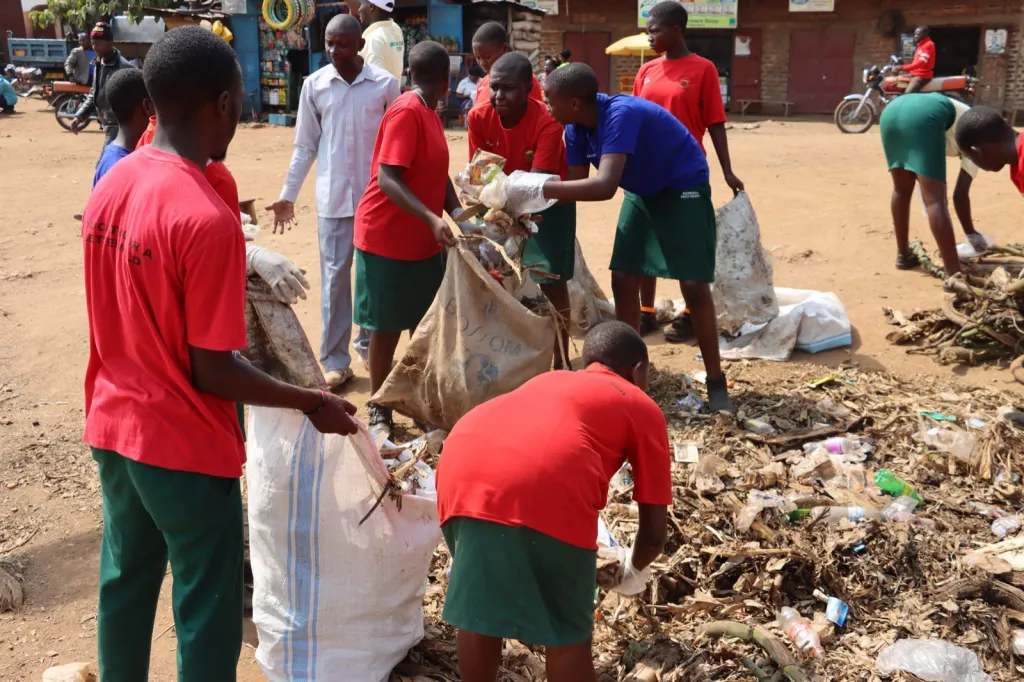
From the bustling streets of Kisenyi in Kampala to Soroti City in the east and Mbarara in the west, thousands of Ugandans rolled up their sleeves today as the country launched its landmark National Cleaning Day.
In a coordinated three-hour clean-up exercise, citizens, local leaders, security forces, and government officials worked side by side to promote a new culture of cleanliness and safeguard public health.
Vice President Jessica Alupo, who presided over the official launch in Kisenyi, described the initiative as a vital pillar for Uganda’s transformation into a middle-income nation.
“Let us make cleanliness a daily habit, not an occasional activity. If each of us plays our part, Uganda will be clean, healthy, and prosperous,” Alupo declared.
The Vice President warned that poor waste management and irregular cleaning continue to expose families — particularly children — to preventable diseases. She urged every citizen to take personal ownership instead of relying solely on government efforts.
Prime Minister Robinah Nabbanja reinforced the national call, stating firmly: “A Clean Uganda Is Everybody’s Responsibility.”
She revealed that the programme was approved by Cabinet in August 2025 under President Yoweri Museveni and will now take place every last Saturday of the month from 7:00am to 10:00am.
During the exercise, vehicular movement was heavily restricted across major areas, creating a calm atmosphere similar to lockdown days — but driven this time by national purpose and unity. The Uganda People’s Defence Force (UPDF) led the clearing of drainage channels in Ntinda, while market vendors, youth groups, and local leaders actively participated in their communities.
Government-Wide Effort
The Office of the Prime Minister is spearheading the initiative in collaboration with key ministries including Health, Water and Environment, and Local Government. Authorities are calling on households, schools, places of worship, and businesses to integrate the monthly exercise into their routines.
Health officials are optimistic that sustained participation will significantly reduce sanitation-related illnesses and cut both household and national healthcare costs.
Early public reaction has been overwhelmingly positive, with many Ugandans viewing the day as an important step toward stronger civic responsibility and national pride.
The government has stressed that participation is mandatory, with police prepared to enforce compliance where necessary.
Comments (0)
Be the first to comment on this story.