
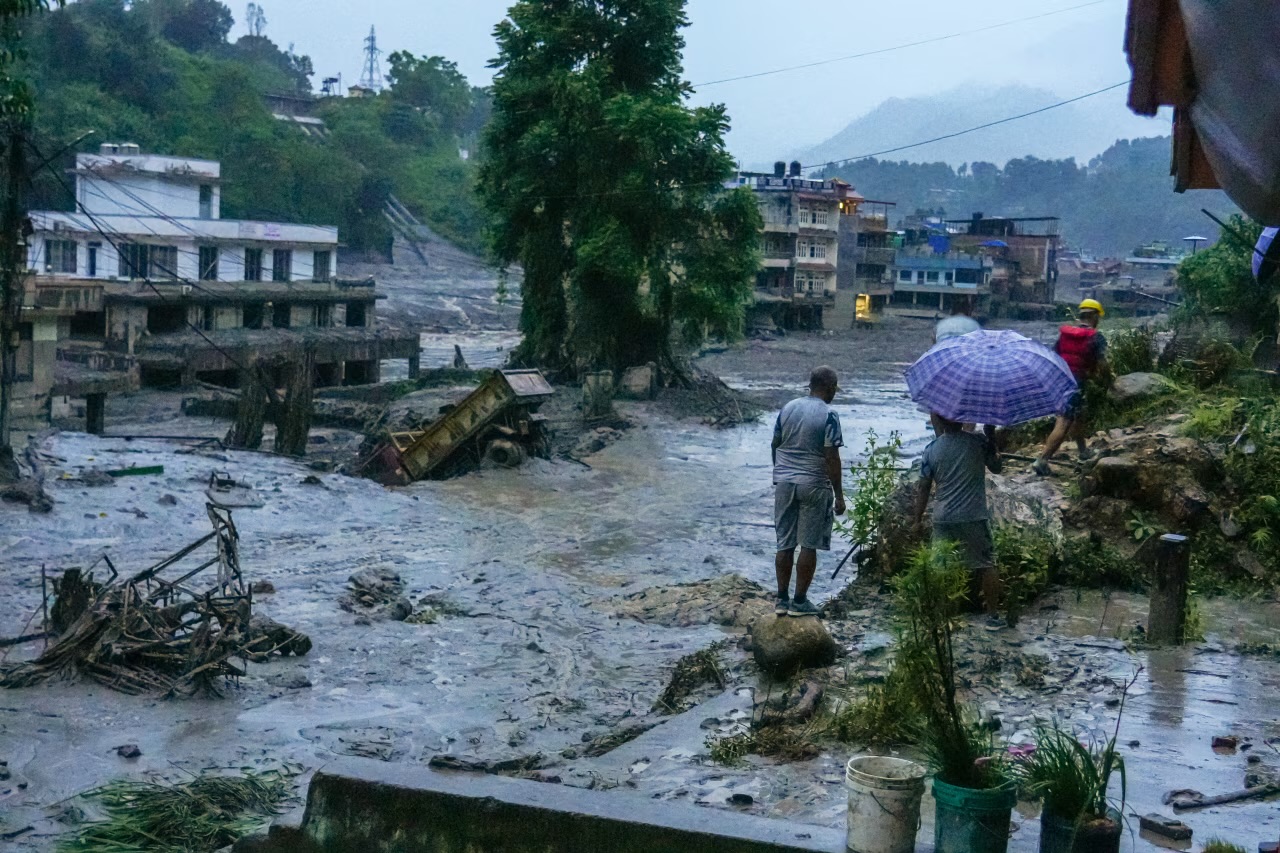
The surge tore through towns and villages along the Trishuli and Bhote Koshi rivers, destroying critical infrastructure, homes, and bridges across the Rasuwa, Nuwakot, and Dhading districts.
Disaster response officials reported that the disaster was likely triggered by a massive glacial collapse and ice-rock avalanche in the Himalayas. The resulting sudden blockage and rapid release of river waters created a wall of mud and water that swept downstream, destroying vital roadways and cutting off remote mountain communities near the border.
Emergency rescue operations involving the Nepal Army, disaster management personnel, and local search teams are under way. Rescuers have utilized helicopters to evacuate injured survivors and airlift trapped residents and foreign tourists from cut-off disaster zones, transporting them to hospitals in Kathmandu for urgent medical care.
Downstream Risks and Ongoing Humanitarian Crisis
High alerts have been issued for downstream settlements along major river systems as authorities monitor potential secondary flooding hazards caused by newly formed dammed lakes upstream. In response, local administrations have urged riverbank residents to move to higher ground and remain vigilant.
Humanitarian organizations, including the Nepal Red Cross, UNICEF, and World Health Organization teams, are dispatching emergency medical kits, clean water supplies, tarpaulins, and temporary shelters to affected regions. Disaster response agencies continue to navigate severed road connections and telecommunications outages to deliver aid to displaced families.
International agencies and relief groups have mobilized emergency funding and support, while neighboring regions downstream step up river monitoring as search and recovery efforts proceed throughout the region.

Comments (0)
Be the first to comment on this story.