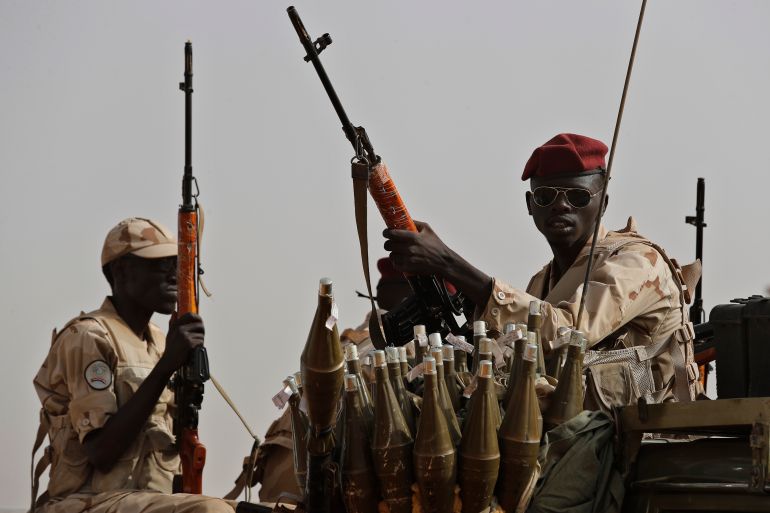
Whether the African Union can turn its diplomatic push in Sudan into a meaningful peace process depends on its ability to overcome severe battlefield realities, institutional limitations, and intense external interference. While the AU High-Level Panel on Sudan and the AU Peace and Security Council continue to advocate for an African-led, inclusive political transition, moving from high-level consultations to an enforceable ceasefire presents monumental challenges.
The primary hurdle remains the existential mindset of the primary warring factions—General Abdel Fattah al-Burhan’s Sudanese Armed Forces (SAF) and Mohamed Hamdan Dagalo’s Rapid Support Forces (RSF). Neither side views the conflict as a negotiable political dispute, with both sides actively pursuing total military dominance and viewing proposed truces merely as opportunities to regroup. Compounding this is the rapid fragmentation of the war, which now involves diverse armed groups, tribal militias, and regional proxy forces that operate beyond the direct control of central military leadership.
Diplomatically, the continental body faces a crowded and uncoordinated field. Competing mediation efforts—spanning the Jeddah platform, IGAD regional initiatives, and various bilateral talks—allow the warring parties to engage in forum shopping to delay commitments. Furthermore, external powers continue to fuel the conflict by supplying heavy weaponry, funding, and logistical support to both sides. Without direct leverage or sanctions mechanisms, the African Union struggles to restrain these external actors or enforce compliance on the ground.
Institutional constraints within the AU also complicate its role. Sudan’s suspension from the African Union following the October 2021 coup has created periodic friction between the AU and the SAF-led Sovereignty Council over neutrality claims. Additionally, the AU lacks the immediate financial, logistical, and troop deployment capacity required to place a physical civilian protection or monitoring force on the ground, which is essential for sustaining any humanitarian truce.
For the African Union to make its mission count, it must move past broad diplomatic statements and enforce a streamlined strategy. This requires unifying all regional and international mediation tracks into a single unified negotiating team, pressuring external sponsors to stop feeding the war effort, establishing concrete local humanitarian corridors, and ensuring Sudanese civilian coalitions have a direct seat at the table to prevent a simple return to military dictatorship.
Comments (0)
Be the first to comment on this story.